
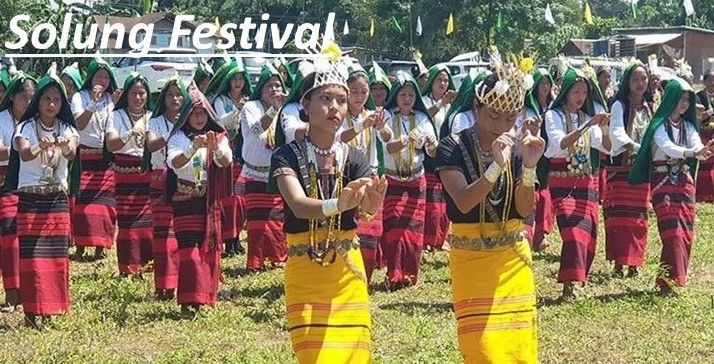
The Solung Festival is one of the most vibrant cultural celebrations of the Adi tribe in Arunachal Pradesh. Observed annually during July and August, corresponding to the Adi calendar months of Tauno and Yio, it is far more than a harvest ritual. Deeply rooted in mythology, agricultural practices, and communal life, Solung reflects the Adis’ devotion to nature, their gods, and their collective identity.
Origins and Mythological Roots
The festival’s origins are steeped in fascinating legends. According to Adi belief, the paddy plant was born from the life essence of Yidum-Bote, son of the God of Knowledge, and nurtured by the goddess Kine-Nane. A squirrel, acting as a messenger of humankind, requested paddy from Kine-Nane. She agreed, but only on the condition that humans sacrifice mithuns (Indian bison) and pigs every year.
This myth explains The Ritualistic Sacrifices Central to Solung and highlights the divine bond between agriculture and human survival. It shows how farming is not merely an economic activity but a sacred covenant between humans and nature.
Preparations and Rituals
Once the village council, known as the Kebang, fixes the date, preparations begin with families brewing rice beer (Apong) and gathering fresh vegetables. The festival spans several days, each marked by unique rituals:
- First Day: Mithuns and pigs are sacrificed, their meat preserved, while Apong flows freely.
- Second Day — Yegling: Preserved meat is shared with relatives, and a grand feast is held for neighbors, women, and children.
- Fourth Day — Oinnyad: A fowl is sacrificed in the fields for Kine-Nane, accompanied by offerings of Apong and Etting.
- Seventh Day — Ekob: Men craft bows and arrows, fastening them to doors to ward off evil spirits.
- Tenth Day — Irni: Villagers uproot weak paddy plants affected by worms and place them on a platform, symbolically appealing to Kine-Nane for crop protection.
These rituals embody agricultural wisdom and the belief in divine guardianship over farming.
Cultural Expressions
Beyond rituals, Solung is a festival of art and joy. The Ponung dance, performed by young girls called Ponung Bona, is a highlight. Accompanied by rhythmic chants, the dance takes place in a communal space known as Yingkiong. It symbolizes unity, refreshment, and celebration, earning Solung the title of the “festival of refreshment.”
Social and Regional Importance
Solung is celebrated widely across the Siang district and by Adis in the Lohit district. Its significance extends beyond Agriculture It Strengthens Social Bonds. Sharing food, drink, and rituals fosters unity among families and neighbors.
The festival also reinforces the Adis’ cultural identity, ensuring traditions are preserved and passed down through generations. It is a living reminder that culture thrives when communities come together in celebration.
Conclusion
The Solung Festival is more than a harvest ritual; it is a living tapestry of myth, faith, and community life. From sacrifices to dances, every aspect reflects the Adis’ deep connection with nature and their gods. By celebrating Solung, the Adis not only pray for prosperity but also reaffirm their cultural heritage and communal solidarity.
This festival stands as a reminder that agriculture is not merely about sustenance — it is about identity, spirituality, and togetherness.