
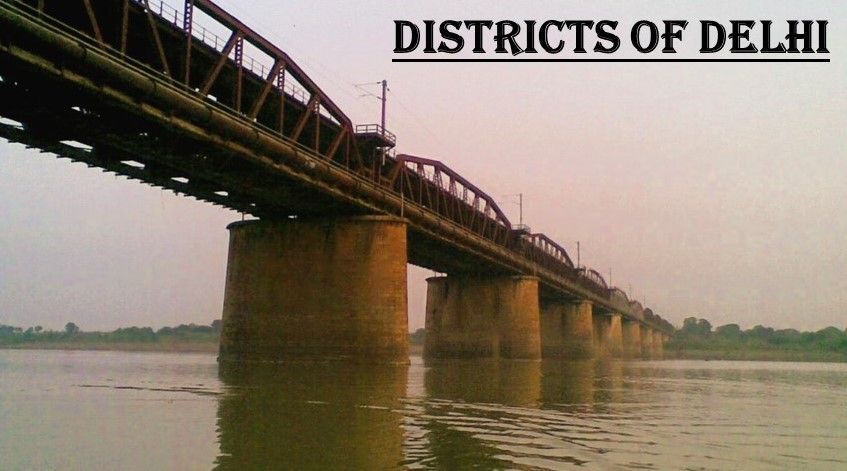
Delhi, the national capital of India, is divided into 11 administrative districts, each with its own unique identity, history, and cultural significance. Among them, South Delhi, South West Delhi, South East Delhi, West Delhi, and Shahdara stand out for their blend of heritage, commerce, and modern development. Together, they reflect the diverse character of the city, offering glimpses into its past while embracing the demands of contemporary urban life.
South Delhi District
South Delhi District is often described as an idyllic tourist destination. It is home to some of the most iconic monuments of Delhi’s history, including the Qutub Minar, a UNESCO World Heritage Site, Balban’s Tomb, and Humayun’s Tomb, which showcase the grandeur of Mughal architecture.
The district is also dotted with famous temples such as the Kalkaji Temple, Lotus Temple, Chattarpur Mandir, and Shri Sai Baba Temple, making it a spiritual hub for devotees. South Delhi’s blend of historical monuments and religious sites makes it a must-visit for tourists seeking both cultural and spiritual experiences.
South West Delhi District
Spread across 420 square kilometers, South West Delhi District has a distinguished historical background. It is divided into three sub-divisions: Dwarka Sub City, Najafgarh, and Kapas Hera. Najafgarh is particularly known for the Najafgarh Lake, a natural attraction that adds ecological value to the district.
The district also includes Delhi Cantonment, which is well connected by railways and roadways, making it strategically important. South West Delhi combines modern residential areas like Dwarka with traditional settlements, offering a unique mix of urban and rural lifestyles.
South East Delhi District
South East Delhi District is primarily a revenue district of the National Capital Territory. It encompasses prominent neighborhoods such as Defense Colony, Kalkaji, and Sarita Vihar. These areas are known for their residential colonies, markets, and cultural vibrancy.
South East Delhi plays an important role in Delhi’s administrative framework while also serving as a hub for middle-class and upper-middle-class communities. Its proximity to major commercial centers and educational institutions makes it a sought-after residential district.
West Delhi District
Covering an area of 129 square kilometers, West Delhi District is one of the most densely populated regions of the capital, with a population density of nearly 14,000 persons per square kilometer. It is divided into three sub-divisions: Patel Nagar, Rajouri Garden, and Punjabi Bagh.
West Delhi is known for its bustling markets and residential colonies. Popular destinations include Rajouri Garden, Patel Nagar, Kirti Nagar, Meera Bagh, Bali Nagar, and Vikaspuri. These areas are not only commercial hubs but also vibrant neighborhoods that reflect Delhi’s cosmopolitan lifestyle.
Shahdara District
Shahdara District is one of the oldest localities of Delhi and was historically part of Purana Dilli (Old Delhi). It is rich in cultural heritage and continues to preserve its traditional charm. The district is home to several popular attractions such as Shalimar Park, Vishwas Nagar, Subhash Park, Panchsheel Garden, Mohan Park, Jyoti Colony, Indira Niketan, Shivaji Park, Nathu Colony, Mansarovar Park, and Babarpur.
Shahdara’s historical significance and its role in shaping Old Delhi’s identity make it an important district for those interested in exploring the roots of the capital city.
Conclusion
The districts of South Delhi, South West Delhi, South East Delhi, West Delhi, and Shahdara together highlight the multifaceted nature of Delhi. South Delhi represents the city’s historical and spiritual heritage, South West Delhi Blends Modernity with Tradition, South East Delhi serves as a revenue and residential hub, West Delhi thrives as a densely populated commercial zone, and Shahdara preserves the essence of Old Delhi.
For travelers, these districts offer a rich mix of experiences—from exploring Mughal-era monuments to enjoying bustling markets and serene temples. For residents, they provide opportunities for commerce, culture, and community living. Delhi’s districts are not just administrative divisions; they are living spaces that embody the city’s history, culture, and future.