
Introduction
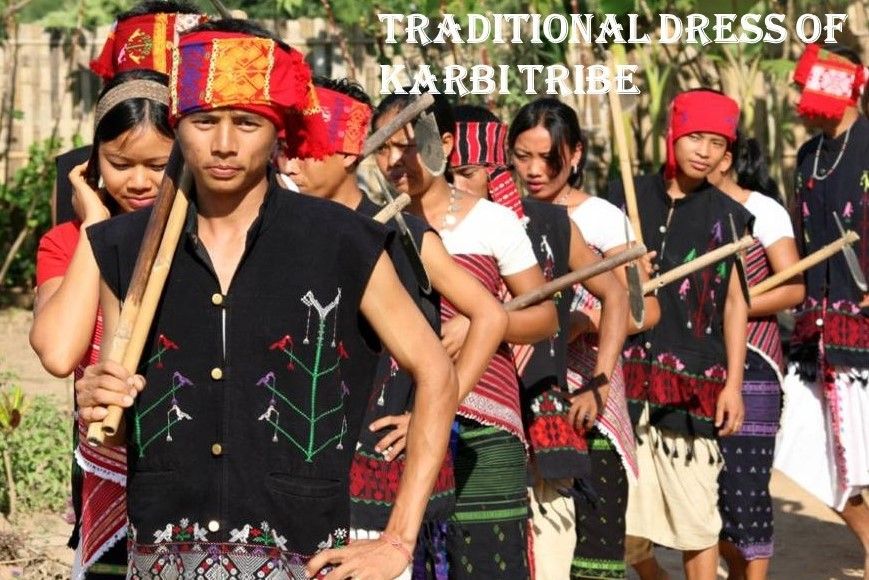
The Karbis, one of Assam’s prominent tribal communities, inhabit the scenic hills of Karbi Anglong. Their cultural heritage is deeply woven into their attire, which has been preserved across generations. Crafted from locally grown cotton and Eri silk, Karbi Garments are both Practical and Artistic. Even today, these traditional clothes remain popular among all age groups, symbolizing continuity of identity and pride. Women weavers play a vital role in sustaining this tradition, blending ancient motifs with modern influences. The diversity of Karbi attire marked by variations in design, color, and symbolism reflects age, gender, and social status. Interestingly, Karbi costumes share similarities with those of the Khasi tribe of Meghalaya, highlighting cultural interconnections within Northeast India.
Traditional Dresses for Men
Choi
The Choi is a warm jacket worn by men of different age groups. Younger men prefer versions like Choi hongthor a ki-ik and Choi hongthor ake-lok, while middle-aged and elderly men wear Choi ang and Choi miri. Beyond its practical use, the Choi signifies dignity and maturity, marking life stages within the community.
Rikong
The Rikong is a loincloth traditionally worn by married and elderly men, especially in rural areas during daily chores. Variants include Rikong jongjong, decorated with colorful designs, and Rikong bamon, a simpler white version. This garment embodies modesty and tradition, serving as practical attire for everyday life.
Poho
The Poho is a turban made from colorful silk cloth. Once widely worn, it has now declined in everyday use. Traditionally, men used Poho to cover their forehead or as a muffler. Types include the plain Poho kelok, the long white Poho, and the decorative Poho ke-er. Though less common today, the Poho remains a symbol of cultural pride and ceremonial elegance.
Sator
The Sator resembles a dhoti, often featuring symmetrical designs and animal motifs. Worn around the waist, it extends to cover the legs fully. The Sator is frequently paired with Pe seleng, a long cloth with vibrant borders and intricate patterns. Together, they form a dignified ensemble for festivals and community gatherings.
Cultural Significance
Karbi attire is more than clothing it is a living expression of identity, heritage, and artistry. Each garment reflects the wearer’s age, marital status, and social role, reinforcing community bonds. The weaving tradition, sustained by Karbi women, ensures that ancient designs continue to thrive while adapting to modern tastes. The persistence of these garments in contemporary times demonstrates the tribe’s resilience in preserving cultural heritage amidst globalization.
Conclusion
The Traditional Dress of the Karbi Tribe is a testament to their rich cultural legacy. From the warm Choi to the dignified Sator, each garment embodies history, artistry, and social meaning. Despite modern influences, the Karbis have successfully kept their attire relevant, ensuring that their identity remains woven into every thread. By cherishing these garments, the Karbi community not only honors its ancestors but also inspires future generations to embrace cultural pride.