
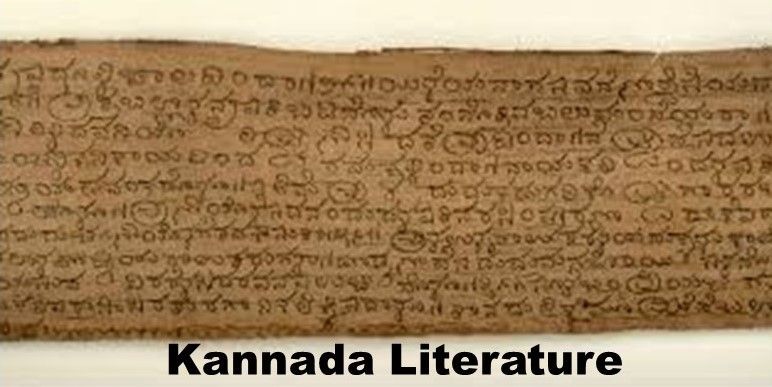
Kannada literature, a distinguished branch of the Dravidian family, has thrived for more than fifteen centuries. Rooted in Karnataka and written in the Kannada script, it reflects the spiritual, philosophical, and social transformations of South India across different eras. Scholars classify its history into three phases: Old (850–1200 CE), Middle (1200–1700 CE), and Modern (1700–present), each marked by unique styles and influences.
Early Foundations: Jain Contributions
The earliest surviving Kannada text is Kavirajamarga(c. 850 CE), composed under King Amoghavarsha. This work set literary standards and highlighted the maturity of Kannada as a Literary Language. Jain writers dominated the early centuries, producing works on Tirthankaras, philosophy, and ethics. Their patrons included the Chalukya, Ganga, Rashtrakuta, and Hoysala dynasties. Inscriptions dating back to the 5th century, often in tripadimetre, reveal that folk traditions—known as deshi literature—existed alongside courtly works.
The Veerashaiva and Bhakti Movements
By the 12th century, the Veerashaiva movement, led by Basavanna, reshaped Kannada literature. Their vachanas—short, powerful prose-poems—broke away from Sanskritic traditions and spoke directly to ordinary people. This marked a shift from royal praise to devotional and egalitarian themes. The Bhakti movement further enriched Kannada literature, with Haridasa poets such as Purandara Dasa and Kanaka Dasa composing devotional songs that blended music with spirituality.
Vaishnava Influence and Vijayanagara Patronage
During the 14th and 15th centuries, Jain influence declined while Vaishnava writers rose to prominence. They drew inspiration from Hindu epics like the Ramayana, Mahabharata, and Bhagavata. The Vijayanagara Empire provided fertile ground for literary growth, and devotional songs became central to Kannada expression. After the empire’s fall, the Wodeyars of Mysore continued to support Kannada writers, ensuring the language’s resilience.
Literary Forms and Innovations
Kannada literature experimented with diverse forms and metres. The Sanskritic champu style—mixing prose and verse—dominated early works but gradually gave way to native metres such as tripadi (three-line verse), shatpadi (six-line verse), ragale (lyrical narrative), and sangatya (musical compositions). These innovations made literature more accessible and musical, reflecting Karnataka’s oral traditions. Alongside religious texts, secular genres such as romance, satire, fables, and scientific treatises also flourished.
Modern Kannada Literature
The 19th century ushered in modernity, influenced by English education and democratic ideals. New genres such as novels, short stories, essays, and literary criticism emerged. Writers began addressing social reform, nationalism, and individual identity. Kannada literature gained national recognition, with authors winning seven Jnanpith awards and over fifty Sahitya Akademi awards. Luminaries like Kuvempu, Bendre, and Girish Karnad brought Kannada literature to global audiences, blending tradition with modern sensibilities.
Legacy and Continuity
From palm-leaf manuscripts to printed books, Kannada literature has evolved while preserving its essence. Inscriptions, hero-stone elegies, and devotional songs testify to its deep roots in everyday life. Today, Kannada literature continues to thrive, balancing Classical Heritage with contemporary voices. Its journey reflects not only the linguistic richness of Karnataka but also the enduring human quest for meaning, devotion, and creativity.