
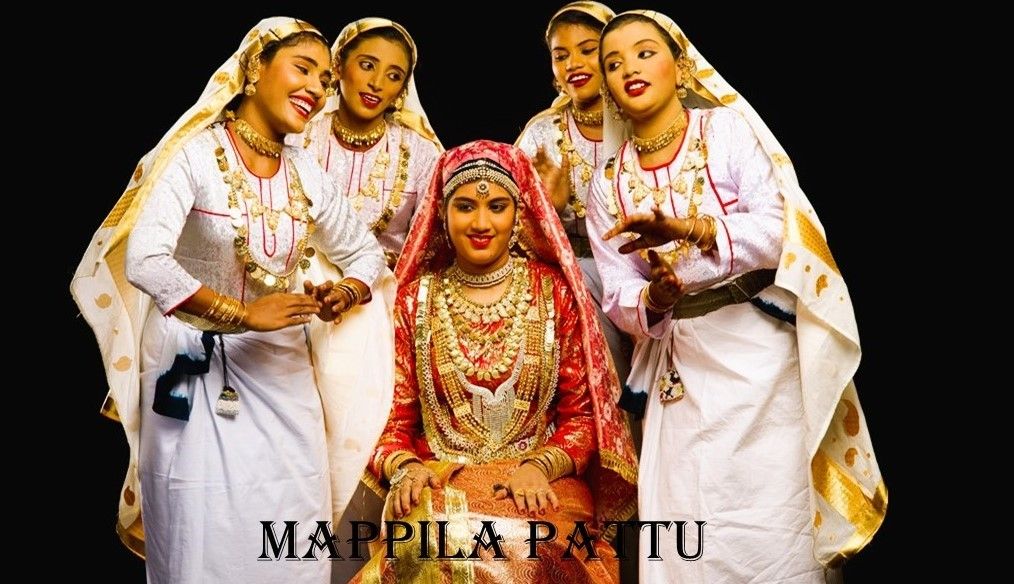
Mappila Pattu, the vibrant folk song tradition of Kerala’s Muslim community, is a unique cultural expression that blends Arabic, Persian, and Malayalam influences. While often celebrated for its rhythmic beauty and lyrical richness, one of its most fascinating aspects is the role of women both as subjects and as creators. Female voices have significantly shaped the evolution of Mappila Pattu, leaving behind a legacy that continues to resonate in Kerala’s cultural and literary landscape.
Women as Subjects in Mappila Pattu
Many Mappila Songs revolve around female figures, celebrating their beauty, emotions, and social roles. The Oppana genre, for instance, is performed during weddings and vividly describes the charm of a bride, painting her in colorful imagery. These songs are not merely entertainment; they reflect community values, aesthetics, and the importance of women in social rituals.
A striking example is Badarul Muneer Husnul Jamal, composed by the legendary Moyinkutty Vaidyar. In this epic, the heroine Husnul Jamal is given a dedicated section that elaborates on her beauty and grace, highlighting how female characters often occupy central positions in Mappila narratives.
Female Poets and Their Contributions
Beyond being muses, women have also been creators of Mappila Pattu. Several female poets enriched the tradition with their poignant verses:
- C.H. Kunhayisha and V. Ayishakkutty wrote sorrowful depictions of the final moments of Khadija, wife of Prophet Muhammad, and Fatima, his daughter.
- Nafeesath Mala, authored by Nalakath Kunhi Moideen Kutty, praises Nafeesa, a woman from the Prophet’s lineage.
- Other notable female poets include Puthur Amina, Kundil Kunhamina, B. Ayishakkutty, and K. Aminakkutty, whose works added depth and diversity to the genre.
These contributions demonstrate that women were not passive participants but active voices in shaping the literary and spiritual dimensions of Mappila Pattu.
Influence on Malayalam Poetry and Cinema
The themes and representations of women in Mappila Pattu have left a lasting impression on Malayalam poetry. Renowned poets such as P. Krishna Kumar, P. Bhaskaran, and Vayalar Ramavarma composed popular Mappila songs that carried this tradition into mainstream Malayalam literature and music.
Since the 1950s, Mappila songs have gained immense popularity, especially through cinema. Films like Mailanchi, Pathinalamravu, Ulpathi, Sammanam, and Manya Maha Janangale featured Mappila songs, ensuring their reach to wider audiences and preserving their cultural relevance.
Promoters and Performers of Mappila Songs
Several artists and composers played crucial roles in popularizing Mappila Pattu:
- S.M. Koya is remembered for his Malabar Mappila Pattukal.
- V.M. Kutty, both a singer and composer, made significant contributions to spreading the genre.
- Other composers include Punnayurkulam V. Bapu, O.M. Karuvarakkundu, and Mohar Munir.
Equally important are the singers who brought these songs to life. Female voices such as Vilayil Faseela, Ramla Beegum, and Aysha Beegum stand out, alongside male singers like V.T. Murali, A.V. Mohamed, and M.P. Ummerkutty. Their performances ensured that Mappila Pattu remained a living tradition rather than a fading relic.
Conclusion
The Role of Women in Mappila Pattu is multifaceted—they are celebrated as subjects of beauty and devotion, but also as poets and performers who actively shaped the genre. Their contributions highlight the inclusivity and richness of Kerala’s cultural traditions. By blending artistry, spirituality, and social commentary, female voices in Mappila Pattu have ensured that this folk tradition continues to thrive, bridging the past with the present.