
Introduction
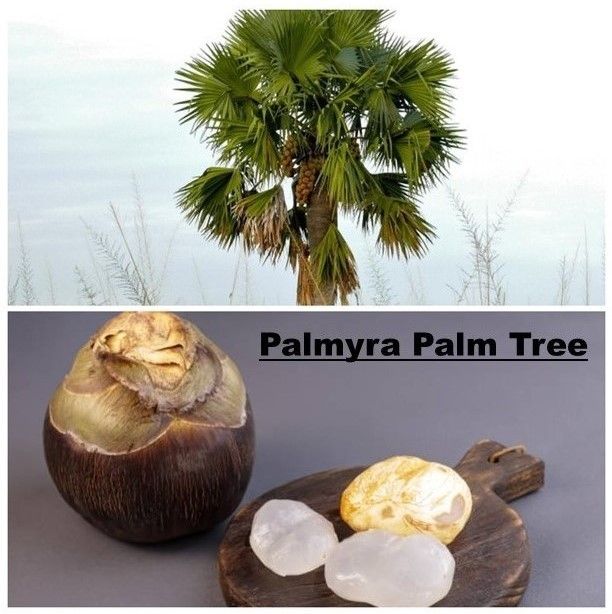
The Palmyra palm tree, scientifically known as Borassus flabellifer, is one of the most iconic and versatile trees of tropical Asia. Its name is rooted in Greek: Borassus refers to the “leathery covering of the fruit,” while Flabellifer means “fan-bearer,” a fitting description of its striking fan-shaped leaves. A proud member of the palm family (Palme), this tree has been admired for centuries for its resilience, beauty, and immense utility.
Across South and Southeast Asia, the Palmyra palm is celebrated under many names. In Hindi and Bengali, it is called Talor Talgachh; in Tamil, Pannei; in Telugu, Lulu or Tacli; and in Malayalam, Karimpana. In English, it is often referred to as the Fan Palm, Toddy Palm, Brab Tree, or Tala Palm. Thriving in the drier landscapes of India, Sri Lanka, Burma, and other warm regions, the Palmyra palm has become inseparable from rural life, traditions, and livelihoods.
Physical Characteristics
The Palmyra palm is a tall and graceful tree, typically reaching heights of 12–18 metres, though some specimens can grow up to 30 metres. Its cylindrical black trunk, marked with semi-circular scars from fallen leaves, makes it easily recognizable. Young trees display plaited bases of leaf stalks, while older ones develop a thicker middle section supported by strong root fibres.
The leaves are its most distinctive feature. Each fan-shaped leaf can grow up to 5 metres long, with 60–80 stiff segments radiating like shining lances. These leaves cluster at the crown, giving the tree a majestic silhouette. The Palmyra is dioecious, meaning male and female flowers grow on separate trees. Flowering usually occurs in March and April, with blossoms appearing again later in the year. Male flowers are smaller and more numerous, while female flowers are larger but fewer.
Following the flowering season, The Tree Produces Green, circular fruits in loose bunches. Each fruit contains three nuts embedded in fleshy pulp. Though not originally native to India, the Palmyra palm has adapted remarkably well and is now widely cultivated, often growing wild in suitable regions.
Uses of the Palmyra Palm Tree
The Palmyra palm is considered one of the most valuable trees in India because nearly every part of it can be utilized:
- Wood and Stem: The hard outer wood is durable, making it ideal for posts, beams, and domestic construction. Hollow stems are often used as natural water pipes.
- Leaves: Strong and versatile, they are crafted into fans, mats, baskets, hats, umbrellas, sandals, and roofing thatch.
- Fruit and Nuts: The jelly-like pulp of young fruits is a refreshing delicacy, while mature nuts and their fleshy embryos are cooked as vegetables.
- Fibres and Midribs: Leaf stalk fibres are fashioned into brushes, while the net-like material at the base of young leaves is used for torches.
The most famous product derived from the Palmyra palm is toddy, a fermented drink tapped from the tree’s sap. Beyond its culinary uses, the tree also has medicinal value. Fresh toddy mixed with rice flour is used as a stimulant poultice, the fruit acts as a mild laxative, and ash from burnt flowers is employed in traditional remedies for biliousness.
Cultural and Religious Significance
The Palmyra palm holds deep cultural importance in South Asia. Its leaves and fruits are often used in ceremonial occasions, such as weddings, where they adorn doorways or decorative shamianas. The tree symbolizes prosperity, sustenance, and resilience, making it a vital part of rural traditions and community life.
Conclusion
The Palmyra Palm Tree is far more than a botanical wonder it is a source of food, shelter, medicine, and cultural heritage. With its towering presence and countless uses, it represents the harmony between nature and human life. Truly, The Palmyra Palm is a tree of inestimable value, enriching both ecology and tradition across generations.