
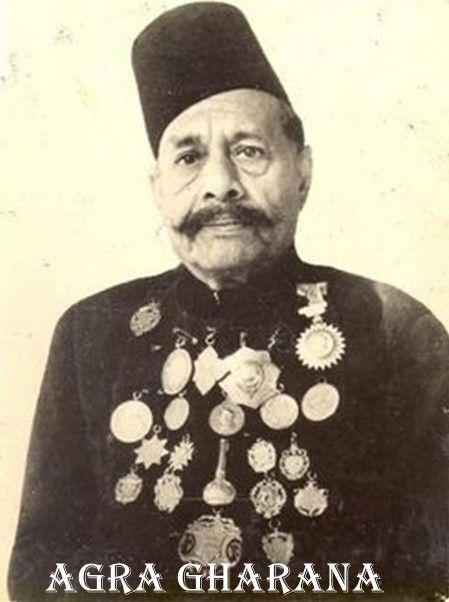
Introduction
The Agra Gharana Gayaki is one of the most distinctive styles in Hindustani classical music, known for its powerful voice culture, rhythmic mastery, and unique blend of dhrupad and khayal. While the gharana eventually became famous for its khayal singing, its roots lie firmly in the dhrupadic tradition, particularly the Nauhari Bani. Over time, the style evolved through the creative contributions of great masters, most notably Ghagge Khudabaksh, who introduced khayal into the Agra repertoire after learning it from Natthan Pirbaksh of the Gwalior Gharana.
Dhrupad Origins and Khayal Integration
Originally the Agra Gharana was a dhrupad gharana, with Nauhari Bamas its chief mode. Even after khayal became the dominant form, dhrupad-dhamar continued to be practiced and taught. This dual training was significant because, unlike other gharanas where dhrupad gradually faded, Agra retained both traditions until recent times.
The mutual influence of dhrupad and khayal enriched the Agra style. While khayal provided lyrical freedom and improvisational scope, dhrupad contributed structural discipline, rhythmic complexity, and grandeur. This blending was especially evident in the singing of Natthan Khan, who skillfully incorporated dhrupadic techniques into khayal, creating a style that was both rigorous and expressive.
Technical Features of Agra Gayaki
The Agra Gharana is marked by several technical features that distinguish its style:
- Rhythmic Techniques: Use of dugun (double speed), cogun (quadruple speed), athgun (eightfold speed), and layakan (rhythmic improvisations).
- Bola-Tana and Tihai: Elaborate use of syllables in melodic patterns, with dramatic tihais (phrases repeated thrice to conclude).
- Lapet of Bola: Creative twisting of words in the bandish to align with rhythmic cycles.
- Bandish Balance: Careful balancing of stressed and unstressed beats in compositions.
- Openness of Utterance: A bold, full-throated style of singing that emphasizes clarity and resonance.
These features highlight the gharana’s emphasis on rhythm (laya) and articulation, making its performances both intellectually stimulating and emotionally compelling.
Components of Training and Performance
In discussing the style of Agra Gharana, several components must be considered:
- Svaroccara (Utterance of Notes): Precision in pronouncing and projecting notes, ensuring clarity and strength.
- Raaga-Vistara (Elaboration of Raaga): Methodical unfolding of the raaga, balancing discipline with creativity.
- Cija and Bandisa (Compositions): Rich repertoire of traditional compositions, often blending devotional themes with artistic innovation.
- Laya-Tala (Rhythm and Time): Mastery over rhythm cycles, with emphasis on complex improvisations.
- Tana (Fast Passages): Use of vigorous, intricate melodic runs that showcase technical brilliance.
These elements combine to create a style that is both rooted in tradition and open to innovation.
Voice and Gayaki
While the voice of individual singers often defines their personal artistry, the gayaki of the gharana represents a collective tradition. Agra singers favor a deep, masculine voice, robust projection, and singing in the lower register (mandra). This voice culture, combined with dhrupadic ornamentations like gamaks and meends, gives Agra performances their distinctive power and resonance.
Conclusion
The style of Agra Gharana reflects a unique synthesis of dhrupad and khayal, enriched by centuries of tradition and innovation. Its emphasis on rhythm, bold voice production, and intricate techniques sets it apart from other gharanas. By retaining dhrupad alongside khayal, the Agra Gharana preserved the grandeur of the past while embracing the expressive possibilities of the present.
This fusion, perfected by masters like Natthan Khan and carried forward by generations of musicians, continues to define the Agra Gayaki as one of the most powerful and enduring traditions in Hindustani classical music.