
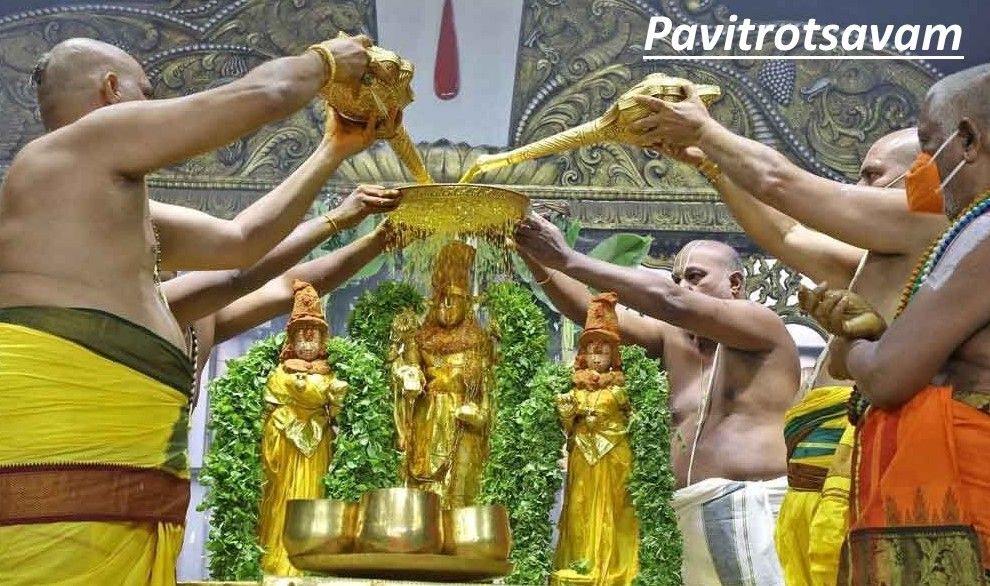
Pavitrotsavam is one of the most revered annual rituals celebrated in South India, particularly in Andhra Pradesh, Telangana, and other southern states. The festival holds immense spiritual significance at the Tirumala Venkateswara Temple, where it is observed with grandeur and devotion. The term “Pavitrotsava” is derived from two Sanskrit words — Pavitra (holy) and Utsava(festival) — symbolizing a sacred celebration dedicated to Lord Venkateswara.
Historical Origins
The origins of Pavitrotsavam at Tirumala date back to 1463. A stone inscription on the northern wall of the Vagapadi verandah in the temple’s first Prakaara provides a detailed account of its institution. The festival was introduced by Saluva Malliah Deva Raja during the reign of Saluva Narasimha. Records even mention the expenses incurred for the celebration of Pavitra Tirunal. Historical evidence suggests that the ritual continued until 1562, after which it was discontinued for a period before being revived.
Objectives of the Festival
- Penitential purpose: To Cleanse and Rectify Errors, omissions, or commissions that may have occurred during rituals throughout the year.
- Propitiatory aspect: To invoke divine blessings and ensure spiritual harmony.
- Known as Dosha Nivaarana (removal of faults) and Sarva Yajna Phalapradha (bestower of the fruits of all sacrifices).
Dedication to Lord Vishnu
According to the Jayakhya Samhita, pavitra acts as a shield against evil. The Puranas emphasize the importance of Pavitra Aaropana (adorning the deity with sacred garlands) as an essential part of worship. This highlights the festival’s deep-rooted connection to Lord Vishnu.
Scriptural References
- The Agni Purana prescribes that Pavitrotsavam should be performed on the first day of a lunar fortnight, either at the beginning of Aashada or the end of Krithika.
- The Garuda Purana recommends the 12th day of either the bright or dark fortnight.
- At Tirumala, however, the ritual is traditionally observed on Sravana Shuddha Dashami.
Rituals and Procedures
- Ankurarpanam: Sowing nine sacred seeds in earthen pots on the eve of the festival.
- Mritsangrahana: Collection of holy soil accompanied by Vedic recitations.
- Vedic Chanting: Priests chant mantras over three days to invoke Lord Vishnu into the Pradhana Kumbha (main sacred vessel).
- Kumbhas: Sixteen other kumbhas surround the Pradhana Kumbha, amplifying spiritual vibrations. On the final day, divine energy is transmitted to Lord Venkateswara.
Sacred Garlands and Processions
On the second day, Pavitras garlands made of special threads are used to adorn Lord Malayappa Swami and his consorts. In the evening, the deities are taken in a grand procession around the four mada streets, accompanied by music, devotion, and vibrant cultural displays.
Suspension of Other Sevas
During the three-day festival, several regular rituals such as Kalyanotsavam, Arjitha Brahmotsavam, Vasanothsavam, Sahasra Deepalankarana, and Dolotsavam are suspended. This ensures complete focus on the sanctity and spiritual essence of Pavitrotsavam.
Conclusion
Pavitrotsavam is not merely a ritual but a spiritual purification process that reinforces the sanctity of temple worship. By rectifying ritualistic errors and invoking divine blessings, it strengthens the bond between Devotees and Lord Venkateswara. Rooted in centuries-old tradition, this festival continues to embody the essence of devotion, discipline, and divine grace in South Indian temple culture.