
Introduction
Magnets have fascinated humankind for centuries, admired not only for their ability to attract iron but also for their perceived effects on the human body. Ancient physicians believed magnets could invigorate blood circulation through arteries and veins, acting upon what they described as martial humours. The term martialrefers to iron, while humoursin ancient medicine represented the four bodily fluids blood, phlegm, black bile, and yellow bile thought to govern health. By this reasoning, magnets were considered useful in treating inflammations, ulcerations, and disorders of the bowels, uterus, and other internal systems.
Although modern science interprets magnetism through physics and biology rather than mystical philosophy, the idea that magnetic fields interact with biological processes continues to inspire research and alternative Healing Practices. Today, magnet therapy sits at the intersection of tradition and innovation, offering insights into how invisible forces may influence human health.
Effect of Magnets on Body Systems
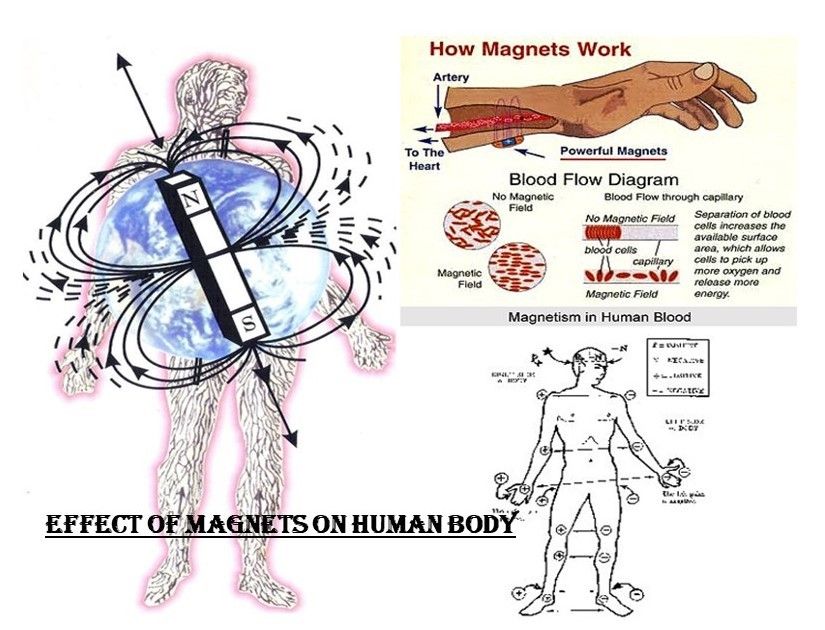
Magnetic fields are believed to influence circulation and cellular activity. Some studies suggest that magnets may stimulate blood flow, potentially reducing swelling and aiding tissue repair. The attraction of iron-rich hemoglobin in red blood cells is often cited as a possible mechanism, though scientific consensus remains cautious.
Historically, magnets were applied to painful or inflamed areas with the belief that they could rebalance the body’s fluids and restore harmony. In India, magnet therapy has been incorporated into holistic healing practices, often used alongside yoga, Ayurveda, and naturopathy to promote wellness and balance.
Effect of Magnets on Human Metabolism
The impact of magnetic fields on metabolism has been attributed to several factors:
- Microbial movement and protoplasmic flow: Magnetic fields can obstruct or redirect the motion of microscopic organisms and cellular fluids, influencing biological activity.
- Tissue growth: Experiments suggest that strong magnetic fields may inhibit mitosis, slowing the growth of young tissue.
- Autonomic nervous system: Magnetic exposure may affect the balance between sympathetic and parasympathetic responses, altering stress reactions and relaxation.
- Magneto-hydrodynamic phenomena: Because blood and other fluids contain ions, their flow can be subtly influenced by magnetic forces, leading to differences in susceptibility across tissues.
A scientist studying liquids under magnetic influence concluded that:
- Magnetic fields increase the number of crystallization centers in a liquid.
- The stronger the field, the greater the number of centers formed.
- Under constant exposure, crystallization centers continue to increase with time.
These findings suggest that magnetism may alter the structure of fluids, potentially influencing metabolic processes and energy balance in the body.
Effect of Magnets on Hormone Secretion
Hormones regulate nearly every aspect of human physiology, from growth to mood. Some researchers propose that magnets may influence endocrine activity by altering blood flow to glands or affecting cellular ion exchange. For example, exposure to magnetic fields has been linked to changes in melatonin secretion, which governs sleep cycles. Though evidence remains preliminary, the possibility of magnets modulating hormone release is an intriguing area of study, particularly for conditions related to sleep, stress, and mood regulation.
Effect of Magnets on the Pituitary Gland
The pituitary gland, often called the master gland, controls hormone production throughout the body. Magnetic stimulation has been explored as a way to influence pituitary activity, potentially impacting growth hormone, thyroid function, and reproductive hormones. While ancient healers may have attributed mystical powers to magnets, modern science investigates whether electromagnetic fields can subtly regulate glandular function, opening possibilities for non-invasive therapies.
Magnetic Properties of the Human Brain and Heart
Both the brain and heart generate measurable electromagnetic fields. The brain’s activity produces weak magnetic signals detectable by magnetoencephalography (MEG), while the heart’s rhythm creates stronger fields measurable outside the body. Magnets may interact with these natural signals, influencing neural communication or cardiac rhythm.
This has led to therapeutic applications such as transcranial magnetic stimulation (TMS), now used in modern medicine to treat depression and other neurological disorders. Similarly, research into cardiac magnetism explores how external fields might support heart rhythm regulation.
Magnetic Effect on Body Wastes
Magnets are thought to aid detoxification by stimulating circulation and metabolism. By enhancing blood flow, they may accelerate the removal of metabolic waste products. Ancient practitioners believed magnets could purify the body’s humours, while modern interpretations suggest they may support natural elimination processes. In India, such practices often complement fasting, yoga, and Ayurveda in wellness traditions.
Magnets and Self-Curative Powers
One of the most appealing ideas in magnet therapy is the acceleration of the body’s self-healing abilities. Magnets are said to energize cells, improve oxygen delivery, and reduce inflammation, thereby supporting recovery. This concept aligns with holistic medicine, which emphasizes the body’s innate capacity to heal when properly supported through lifestyle, diet, and natural therapies.
Magnetism in Astral Bodies: Sun and Moon
Beyond the human body, magnetism is a cosmic force. The Sun generates immense magnetic fields that influence solar activity and space weather, while the Moon’s weaker magnetism affects tides and rhythms on Earth. Ancient philosophies often linked human magnetism to these celestial bodies, suggesting that cosmic forces resonate with our internal energies. In Indian philosophy, this connection between cosmic rhythms and human health is echoed in practices such as astrology and Ayurveda.
Magnetic Effect on Tumors
Research into magnetism and cancer has explored whether magnetic fields can influence tumor growth. Some studies suggest that magnets may slow cell division or enhance immune response, while others remain inconclusive. The idea of using magnetism to control or remit tumors reflects the broader hope that non-invasive forces could complement conventional therapies, offering gentler alternatives in the fight against disease.
Ancient Philosophy of Human Magnetism
In ancient philosophy, magnetism was seen as a vital force connecting the body to the universe. Healers believed magnets could balance the humours, restore harmony, and align the body with cosmic energies. While modern science interprets magnetism through physics and biology, the ancient view reminds us of humanity’s enduring quest to understand invisible forces and their role in health.
Conclusion
The effect of magnets on the human body bridges ancient philosophy and modern science. From circulation and metabolism to hormone secretion and brain activity, magnets have been credited with diverse influences. While scientific evidence remains mixed, magnetism continues to inspire both medical research and holistic healing practices.
Whether viewed as a cosmic force or a therapeutic tool, magnets remind us of the profound connection between invisible Energies and Human Health. In India and across the world, magnet therapy remains part of the broader conversation on health, healing, and fitness an enduring testament to humanity’s fascination with the unseen forces that shape our lives.