
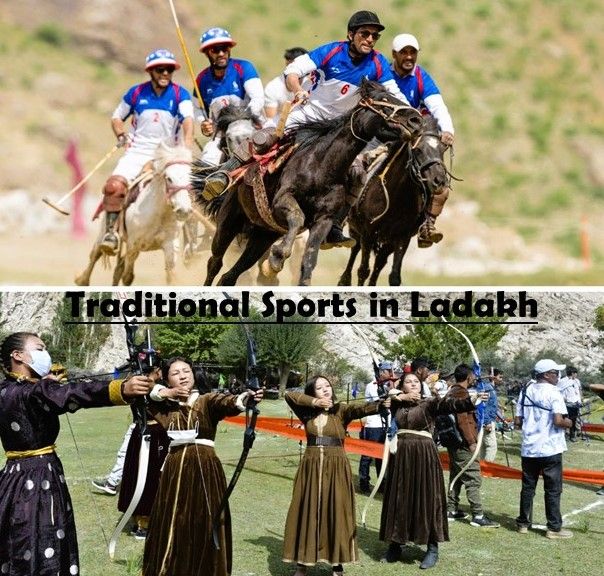
Ladakh, often hailed as the “Land of High Passes,” is a region where breathtaking landscapes meet timeless traditions. Beyond its snow-clad peaks and rugged valleys, Ladakh nurtures cultural practices that embody both joy and identity. Among these, the traditional sports of polo and archery stand out as vibrant reflections of heritage, community spirit, and resilience.
Polo in Ladakh: A Rustic Legacy
Unlike the polished version of polo seen elsewhere, Ladakhi Polo is Raw, energetic, and deeply rooted in community life. Its origins date back to the mid-17th century when King Sinnge Namgyal, influenced by his Balti heritage, introduced the sport to Ladakh. From Central Asia, polo traveled through Baltistan and Gilgit before becoming a cherished tradition in Leh.
The game is refreshingly simple. Played on horseback, goals are set at either end of a street, and the match continues until one team scores nine goals, marking the end of a half. Unlike modern polo, there are no chukkers or complex rules only one foul is recognized: cutting across another player’s path. This simplicity makes Ladakhi polo thrilling for both players and spectators.
What truly sets it apart is the communal spirit. Teams are often formed based on the availability of skilled riders, and matches are played with immense enthusiasm. Victories are celebrated with heartfelt joy, while defeats are mourned with equal intensity. This emotional connection reflects how deeply polo is woven into the lives of Ladakhis, becoming more than just a sport—it is a shared cultural heartbeat.
Archery in Ladakh: Precision and Tradition
Archery, another treasured tradition, has been passed down through generations and holds a special place in Ladakhi folklore. Legendary figures such as Darpon Chemo, celebrated in the epic of Kesar Sagar, symbolize the skill and reverence associated with this sport.
Competitions are organized with strict etiquette and cultural rituals, transforming them into festive gatherings. Participants are divided into two groups, each led by a captain. The target, known as Isa gaor bull’s eye, becomes the focal point of excitement. When a player hits the target, his partner honors him with a khatak(white scarf), followed by a celebratory dance. Traditional instruments like the surna (shehnai) and daman (drum) provide a lively soundtrack, enhancing the festive atmosphere.
Archery is more than a test of skill it is a cultural practice that strengthens social bonds. Passed down through generations, it continues to inspire young Ladakhis, many of whom now pursue archery professionally, showcasing remarkable dedication and precision.
Cultural Significance: More Than Just Games
Both polo and archery transcend the boundaries of sport in Ladakh. They are festivals of joy, unity, and tradition, bringing communities together and reinforcing cultural identity. These games preserve ancestral practices and embody the Ladakhis’ respect for heritage.
Whether it is the thunderous gallop of polo ponies or the sharp precision of archers aiming at the bull’s eye, these traditional sports remain Vibrant Expressions of Ladakhi Culture. They enrich the lives of the people and ensure that their ancestral legacy continues to thrive amidst modern changes.