
Introduction
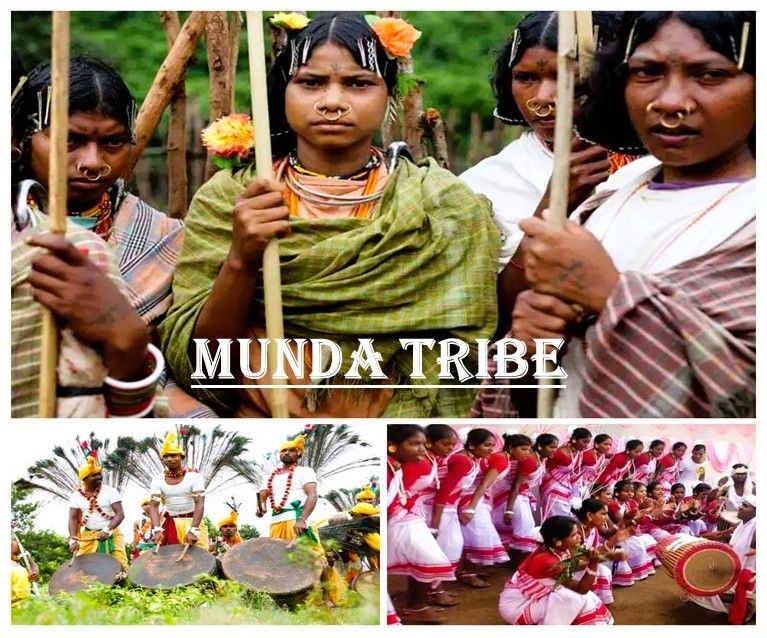
The Munda tribe, one of the prominent tribal communities of eastern India, has a rich cultural heritage rooted in myths and legends. Before settling in the Chotanagpur plateau, the tribe was divided into numerous clans, each with its own distinct identity. Over time, these clans split further, adopting new names and traditions. What makes them fascinating is the way their origins are explained through Mythical Tale Storiesthat blend everyday life, nature, and symbolic acts into clan identities. These myths not only narrate the beginnings of each clan but also highlight the values, taboos, and beliefs that shaped Munda society.
Clan Legends
- Balemucu Clan Members of the Horo clan once caught a tortoise using a bow-like net called Balemucu. After eating the tortoise, they formed a new clan named Balemucu, vowing never to eat fish or tortoise caught with such a net.
- Bodra Clan In Tamar’s village Andiki, an old man ate so greedily at a feast that his face and hands were smeared with food. His descendants came to be known as Bodra, symbolizing indulgence and identity through behavior.
- Lengbodra Clan During a hunt, one man killed only a Lang bird. An elder declared that since it was their first hunt, they should be called Lang Bodra, refraining from killing the bird thereafter.
- Ramrabodra Clan This clan emerged when members ate Ramra pulse before it was cooked, marking their distinct identity as Ramra Bodra.
- Dorarae Clan A man smeared with honey while collecting it from a tree needed seven vessels of oil to clean his hair. From then, his descendants were called Dorarae.
- Horo Clan When an old man was stranded at a flooded river, a tortoise (horo) carried him across. In gratitude, he adopted the tortoise as kin, giving rise to the Horo clan.
- Hunipurti Clan A child was found safe in a rat hole, lying on cotton wool. The clan honored rats as brethren and refrained from harming them, becoming Hunipurti.
- Kandir Clan Brothers carrying half a maund of flattened rice while marrying off their sister gave rise to the Kandir clan.
- Mundu Clan Migrants halted when their straw rope burned out near Mundu village. They settled there, forming the Mundu clan.
- Pandu/Nag Clan A faithful white snake (Nag) carried its dead master’s body home. His sons honored the snake, forming the Nag Kili clan.
- Sarukad Purti Clan Saved from a flood by clinging to a faro plant, the clan honored it by roasting fowl in its leaves, becoming Sarukad Purti.
- Soy Clan After killing a giant fish that damaged cotton fields, sub-clans emerged based on roles in dividing and sharing the fish Tuingsoe, Jangsoe, Tilsoe, and Patra Kili.
- Tuti Clan During migration, one group helped another by sending fire across a flooded river using a fork of the Tuti plant. In gratitude, they named themselves the Tuti clan.
Conclusion
The Myths of the Munda clans are more than mere stories; they are cultural markers that define identity, kinship, and moral codes. Each legend reflects the tribe’s close relationship with nature, animals, and plants, while also emphasizing values like gratitude, restraint, and communal harmony. These clan myths remain an integral part of Munda tradition, offering insight into how folklore shapes social structure and collective memory.