
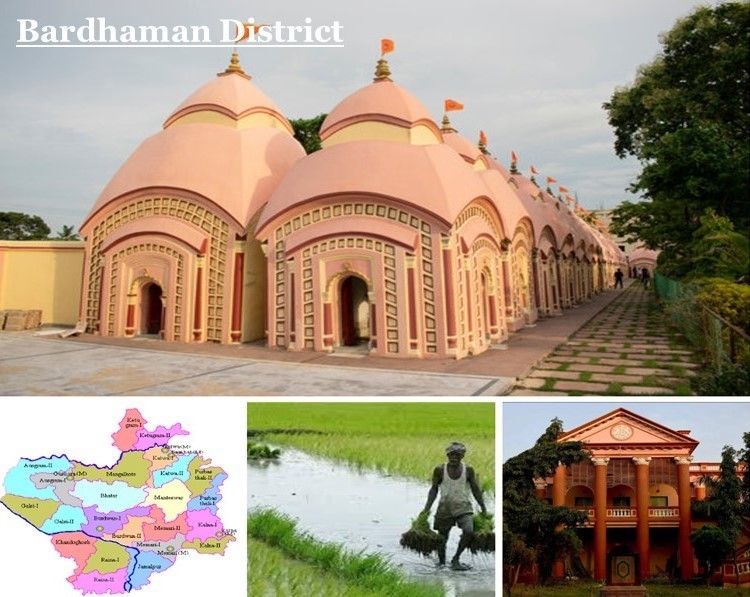
Once a unified district, Bardhaman now thrives as Purba and Paschim Bardhaman each echoing the legacy of a region rich in history, culture, and industry.
Bardhaman District, formerly a single administrative unit in West Bengal, was bifurcated in 2017 into Purba Bardhamanand Paschim Bardhaman. Despite this division, the region continues to be a vital contributor to the state’s cultural identity, economic development, and historical significance. Covering over 7,000 square kilometersand housing nearly 6.9 million residents as per the 2001 census, Bardhaman remains a dynamic and multifaceted region in eastern India.
Historical Significance: From Ancient Civilizations to Colonial Influence
The roots of Bardhaman’s history trace back to ancient India, with archaeological evidence suggesting settlements as early as the Mesolithic Age around 5,000 BCE. The region was once part of the Magadha Empire, and later came under the rule of the Mauryas, Guptas, Kushanas, and Palas. During the Mughal era, Bardhaman was known as Sharifabad, a prominent administrative center.
A pivotal moment in its history was the rise of the Bardhaman Raj family, who became influential zamindars under the Mughal and British regimes. Their contributions to education, infrastructure, and religious institutions laid the groundwork for modern development. Bardhaman’s achievement of 100% literacy stands as a testament to its progressive outlook.
Geography: Fertile Lands and River Valleys
Bardhaman geography is characterized by fertile plains, river valleys, and mineral-rich zones. Situated in the Ganges alluvial basin, the region is ideal for agriculture. The Damodar River, once notorious for flooding and dubbed the “Sorrow of Bengal,” now plays a crucial role in irrigation and industrial water supply.
Historically, the district was divided into six subdivisions: Asansol Sadar (North), Sadar (South), Durgapur, Kalna, and Katwa. While Asansol and Durgapurhave evolved into major industrial hubs, Kalnaand Katwa retain their rural charm and historical essence.
Economy: A Dual Engine of Agriculture and Industry
Bardhaman’s economy is powered by a robust combination of agriculture and industry. Its fertile soil supports the cultivation of rice, wheat, and vegetables, earning it the title “Rice Bowl of Bengal.” Simultaneously, its industrial landscape has made it a cornerstone of eastern India’s economic framework.
Key Industrial Establishments Include:
- Durgapur Steel Plant (SAIL): A major steel producer since the 1950s
- Durgapur Alloy Steel Plant: Supplies alloy steels to defense and railways
- IISCO Steel Plant (Burnpur): One of India’s oldest steel plants
- Durgapur Fertilizer Project: Produces essential chemical fertilizers
- Durgapur Project Limited: Provides power, water treatment, and housing
- Chittaranjan Locomotive Works: Among Asia’s largest electric locomotive manufacturers
- Hindustan Cables Limited: Former telecom cable producer
These industries have spurred urbanization, employment, and educational growth, transforming Bardhaman into a vibrant industrial zone.
People and Culture: Diversity and Education
The people of Bardhaman represent a rich tapestry of urban and rural communities. The district boasts a high literacy rate and a strong educational infrastructure, including universities, colleges, and technical institutes. While Bengali is the primary language, Hindi and Englishare also widely spoken, especially in urban centers.
Religious diversity is a hallmark of the region, with communities of Hindus, Muslims, Christians, and Sikhs coexisting harmoniously. Festivals such as Durga Puja, Eid,and Christmas are celebrated with enthusiasm, reflecting Bardhaman’s inclusive and vibrant cultural spirit.
Tourism: Spirituality Meets Natural Beauty
Bardhaman offers a rich array of attractions for tourists, historians, and nature lovers:
- 108 Shiva Temples in Kalna: Built in the 18th century, arranged in concentric circles
- Sarbamangala Temple: A revered shrine dedicated to Goddess Durga
- Kankaleshwari Temple: Near Asansol, known for its tantric significance
- Meghnad Saha Planetarium: Promotes astronomical education
- Deul Park & Ramnabagan Wildlife Sanctuary: Ideal for nature walks and bird watching
These sites showcase Bardhaman’s spiritual depth and ecological charm, making it a compelling destination for travelers.
Connectivity: Well-Linked and Accessible
Bardhaman is seamlessly connected by road and rail. The Grand Trunk Roadand NH-2 link it to Kolkata and other major cities. Bardhaman Junction is a crucial railway station on the Howrah-Delhi route, ensuring smooth travel across the region. The nearest airport is Netaji Subhas Chandra Bose International Airport in Kolkata, approximately 100 kilometers away.
Accommodation options range from budget hotelsto government guest houses, catering to diverse traveler needs. The best time to visit is between October and March, when the weather is pleasant and the festive atmosphere is at its peak.
Conclusion: A Region of Enduring Legacy
Bardhaman District, now split into Purba and Paschim Bardhaman, continues to embody the grandeur of West Bengal. Whether you’re drawn to its ancient temples, intrigued by its industrial might, or enchanted by its natural landscapes, Bardhaman offers a journey that is both enlightening and unforgettable. Its blend of history, culture, economy, and tourism makes it A True Gem in India eastern corridor.